

Our Decontamination Room ensures that the practice is fully compliant with latest regulation
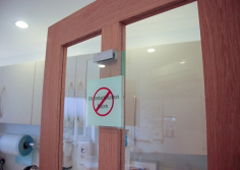
When sitting in the waiting room patients are able to look into our decontamination room and watch the nurses cleaning the instruments and here we are looking to explain what they are doing. HTM 01-05, a government directive, was introduced in 2009 to give comprehensive advice and guidance on the decontamination of instruments within the dental practice and this is the standard which we adhere to with all our dental instruments cleaning and storage.
Decontamination is the process by which reusable items are rendered safe for further use. Decontamination is required to minimise the risk of cross-infection between patients and between patients and staff.
HTM 01-05 put in place certain standards that practice’s must meet called essential requirements and further advice on the standards for best practice.
Best Practice
-
A local infection control policy – Completed, a copy of this is available on request This states the exact procedures which all staff must adhere to in their day to day work within the practice.
-
A nominated lead member of staff responsible for infection control and decontamination – Completed, Mrs Robinson is our nominated lead
Mrs Robinson oversees all the decontamination procedures within the practice and ensures that all staff are kept aware of changes in policy and receive yearly training. -
Reprocessing of dental instruments should be undertaken using dedicated equipment – Completed, we use an Ultrasonic bath, DAC machine, washer-disinfector and Autoclave to process instruments
These are the four main machines within the decontamination room and we will look at each in turn more closely.
The Ultrasonic Bath
An Ultrasonic is an electronic generator that transmits high-energy and high-frequency vibrations to a fluid-filled container used to remove particulate matter from dental instruments and appliances.
The Ultrasonic is used as the first step to remove tissue, blood and other contaminants from reusable instruments. Ultrasonic energy creates billions of minute bubbles in an ultrasonic cleaning bath that implode with tremendous force when they come into contact with the dental instruments. This process reaches into tiny cracks and crevices, literally blasting contaminants away from the surface.
A cleaning solution is added to the water to provide the optimum cleaning solution.
Instruments are placed in the basket so that they are fully submerged and run through for a cycle of 10 minutes
Following this the instruments are washed, dried, inspected and bagged before they can go into the Autoclave.
DAC Machine
An indispensable item of equipment that cleans, lubricates and sterilizes up to six handpieces in one fully automated process.
This optimizes hygiene procedures and makes sure patients benefit from the best possible level of hygiene.
The DAC machine cleans the internal channels of the instruments as well as all external parts, and also lubricates and sterilizes them at a temperature of 134°C.
This eliminates any risk of cross-contamination. The process also ensures the best possible maintenance of handpieces.
All you need to do is to place the instruments on the lid and press the start button. It’s simple, clean and safe.?
Autoclave
An Autoclave is a strong, pressurised, steam heated vessel used for sterilising all the dental instruments.
Steam autoclave treatment combines moisture, heat and pressure to inactivate microorganisms.
Steam autoclaves will reach a temperature of 135?C and a pressure of 2.16, with each cycle lasting around 45 minutes.
All instruments go through the autoclave to ensure that they are completely sterile and no instrument is left in a draw for more than 21 days before it is re-processed
All cycle details are recorded and are closely monitored to ensure that the autoclave is maintaining the appropriate temperature and pressure.
Washer Disinfector
Washer disinfectors have a double function: first a thorough cleaning process followed by disinfection where the water temperature is elevated almost to boiling point.
An important feature of washer-disinfectors is the extremely high flow of water, in terms of both volume and pressure. The massive flow of water spraying all items in the washer disinfection process results in very effective physical cleaning.
-
Dedicated hand-washing facilities should be provided – Completed, All surgeries contain a dedicated hand-washing sink, as does the decontamination room
The main purpose of hand washing is to reduce the number of disease causing micro-organisms on the skin surface.
All taps are hands-free as this helps to prevent cross contamination from the handle.
Liquid detergent hand wash is used from a hands free dispenser again to prevent cross contamination.
Antiseptic gel is also provided. This is used for killing bacteria and viruses on clean hands. It will not remove dirt.
After cleaning hands are dried with disposable towels. This is an essential part of removing dirt and bacteria, which are present in the residual water on the hands. Using a towel can decrease the bacteria on the hands by 75%
-
Instruments are wrapped either before or immediately after decontamination – Completed, all instruments are pouched either before or after they come out of the autoclave
-
Complete training records should be in place for all staff – Completed, all staff have individual training records, which are updated regularly
-
A dedicated decontamination room should be in place to allow for complete separation of reprocessing procedures for instruments – Completed, our decontamination room has now been in place for 2 years
-
The practice should have safe procedures for the transfer of contaminated items from the treatment to the decontamination area – Completed, Instruments are all transported to the decontamination room in sealed plastic containers
-
Regular audits of the infection control and decontamination practices should be carried out to provide a quality assurance system – Completed, Audits are carried out regularly on all machinery within the decontamination room
-
Improve separation of decontamination processes from other activities and enhance the distinction between clean and dirty workflows – Completed, a clear working pattern is established within the decontamination room as instruments are processed
At Valley Dental Practice we constantly strive to ensure that we provide the cleanest and safest possible environment for our patients. If you have any questions about the way we ensure that you are kept safe or the procedures we use in the surgery do not hesitate to ask at your next visit.